
- 2023 Autumn- Learn with FA1 Newsletter
- 2023 Summer- FA1 Trust Newsletter
- 2023-Autumn- FA1 Trust Newsletter
- 2024- Spring- FA1 Trust Newsletter
- 2024 Spring- Learn with FA1 Newsletter
- 2024 Summer- Learn with FA1 Newsletter
- 2024-Autumn-FA1 Trust Newsletter
- 2025 Autumn One- Learn with FA1 Newsletter
- 2025 Autumn Two- Learn with FA1 Newsletter
- 2025 Spring- Learn with FA1 Newsletter
- 2025 Spring Two- FA1 Trust Newsletter
- 2025-Autumn One- FA1 Trust Newsletter
- 2025-Autumn Two- FA1 Trust Newsletter
- 2026 Spring One- FA1 Trust Newsletter
- 2026 Spring One- Learn with FA1 Newsletter
- 2026 Spring Two FA1 Trust Newsletter
- 2026 Summer Two Trust Newsletter
- Karen Bramwell OBE
How to Become a Teacher in England: A Step-by-Step Guide
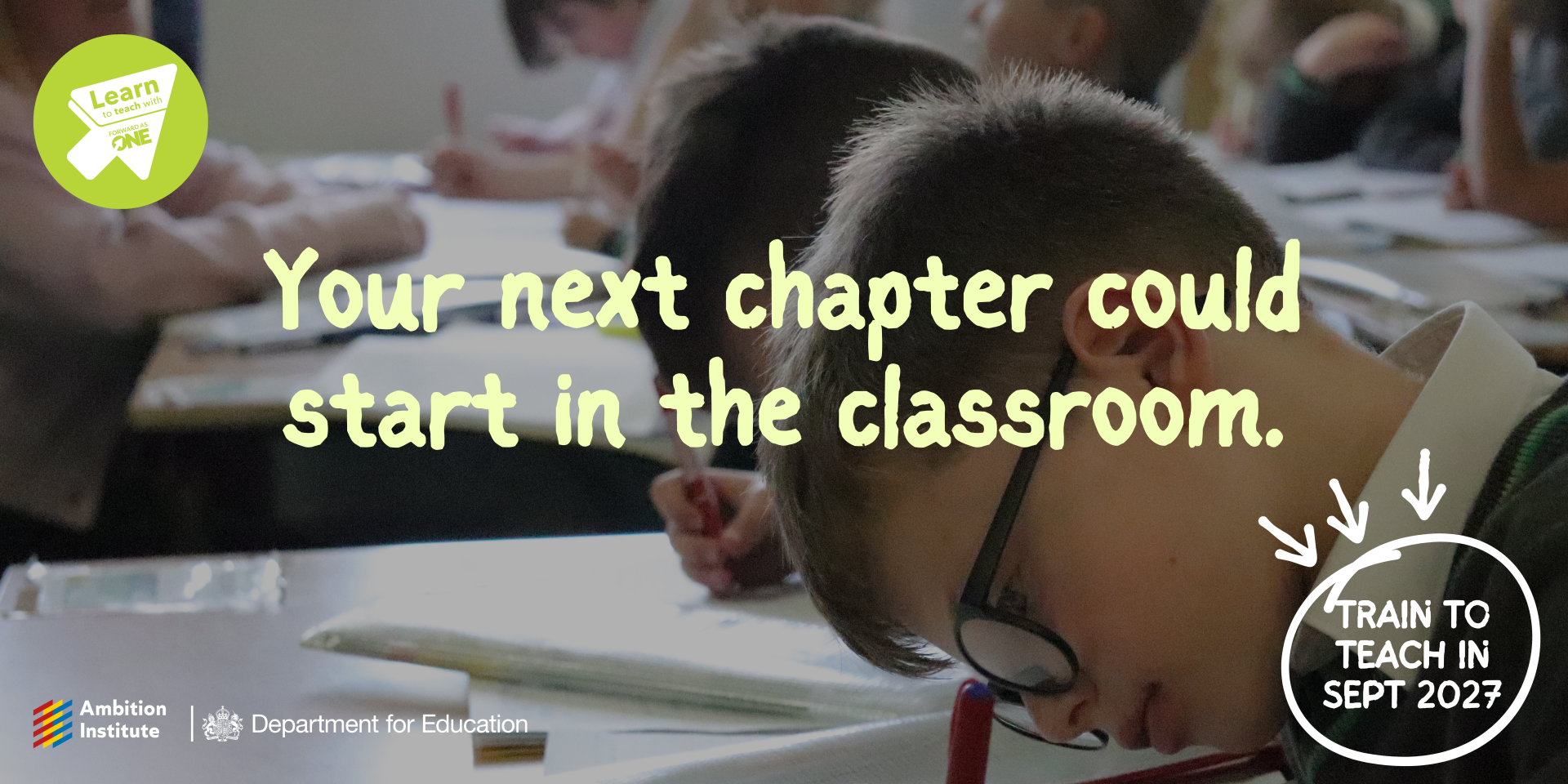
Teaching plays a vital role in shaping the lives of young children, and it can be incredibly rewarding. But how do you actually get into teaching?
In this guide, we'll explain the qualifications you'll need, the different training pathways available and how you can take your first step towards becoming a qualified teacher.
Ready to start your teacher training journey?
Explore Teacher Training with Forward as One
How to become a teacher in 4 steps
Check that you meet the entry requirements
Before you apply for teacher training, you’ll need to make sure you meet the relevant academic requirements. Most training providers, like ourselves at Forward as One, will require applicants to hold a bachelor’s degree and a GCSE in English, Maths and Science.
We will need to see your certificates in person, so it’s worth finding them before you apply.
Apply for teacher training
Once you have gathered your qualifications, you can apply for teacher training through a recognised provider.
Many aspiring teachers will choose Forward as One for a school-based route. This style of training allows you to gain practical classroom experience alongside professional development and training.
Complete your teacher training
During your teacher training programme, you’ll develop the knowledge and experience needed to become a qualified, effective teacher.
You’ll gain classroom experience, receive mentoring and complete professional studies that focus on topics such as behaviour management and professionalism.
Gain Qualified Teacher Status (QTS)
Successfully completing your teacher training course will allow you to achieve Qualified Teacher Status, enabling you to begin your teaching career as an Early Career Teacher.
As an ECT, you will continue to develop your teaching skills, develop strong classroom practice, build effective habits and deepen your pedagogical knowledge.
What qualifications do you need to become a teacher?
To become a teacher in England, you need a combination of academic qualifications and professional teacher training.
GCSE requirements:
You must have a minimum of a 4/C in English and Maths. If you’re applying for a Primary Teaching course, you will also need a Science GCSE at a 4/C as well.
If you are applying for a Secondary course, you do not need to have a Science GCSE.
Degree requirements:
Most teachers must have a bachelor’s degree of 2:2 or higher. For those wanting to teach primary, the subject of the degree is less important, but if you are looking to teach at a secondary level, your degree usually needs to relate to the subject you want to teach.
If your degree isn’t directly related to the subject you’d like to teach, you may be able to complete a Subject Knowledge Enhancement (SKE) course before beginning your teacher training.
Qualified Teacher Status:
Qualified Teacher Status (QTS) is the professional qualification that allows you to teach in most schools in England.
You’ll achieve QTS by completing an accredited teacher training programme such as Initial Teacher Training.
Do you need a PGCE to become a teacher?
No, you don’t need a PGCE to become a teacher in England. The legal requirement for teaching in most schools is QTS.
However, when you train to teach with Forward as One, you’ll combine a QTS with a Postgraduate Certificate in Education (PGCE). A PGCE can provide a deeper understanding of educational theory, research and pedagogy while also offering an additional academic qualification.
Many teachers choose to gain both QTS and a PGCE to support their future career development.
Apply for a PGCE with QTS today!
Can you become a teacher later in life?
Yes, you can absolutely become a teacher later in life!
Teaching is a popular career choice for people looking for a new challenge later in life, and many of our trainees begin their teaching journey in their 30s, 40s and beyond.
Career changers often bring valuable transferable skills such as:
- Communication
- Leadership
- Organisation
- Problem-solving
- Teamwork
- Professional experience
Schools value the experience and wider perspectives that career changers can bring to the classroom.
Whether you’re leaving the corporate world, the public sector, retail or another profession entirely, it’s never too late to train to become a teacher.

What is Initial Teacher Training?
Initial Teacher Training (ITT) is the route most graduates take to become qualified teachers.
ITT combines practical classroom experience with professional studies, helping trainees develop the skills and knowledge to achieve QTS.
At Forward as One, our ITT programme is school-based, allowing trainees to learn while gaining valuable hands-on classroom experience.
Classroom placements
You will spend the majority of your time in class, gradually building up to 80% solo teaching by the end of the course.
During your placement, you will:
- Observe experienced teachers
- Plan and teach lessons
- Support pupil progress
- Develop behaviour management strategies
- Assess and mark pupils’ work
You will also experience a contrasting placement school to broaden your understanding of different educational settings.
Professional studies
Alongside your everyday classroom experience, you will be required to attend professional study sessions. You will learn about a range of topics, including:
- How pupils learn
- Behaviour and classroom management
- Planning lessons around the national curriculum
- Assessment of pupils’ work and effective feedback
- Inclusive teaching practices
- Safeguarding
Mentoring and assessment
You will be assigned a mentor at your placement school who will support and guide you through the course.
Your mentor will:
- Provide regular feedback
- Observe the lessons you teach
- Guide you on a professional level
How do you pay for teacher training?
There are several funding options available to support aspiring teachers.
Depending on your specific circumstances, you may be eligible for:
- Tuition fee loans
- Maintenance loans
- Teacher training bursaries
- Scholarships
The funding available will depend on your chosen subject, route and personal circumstances.
Apply for teacher training today!
Teacher training FAQs:
How long does it take to become a qualified teacher?
Most full-time teacher training programmes take around one academic year (11 months) to complete.
We also offer part-time routes, which are spread across two academic years.
Do trainee teachers get paid?
As a standard, trainee teachers do not get paid. However, if a school were to offer a placement for a salaried trainee, they would receive a salary as agreed by the school.
When you apply for the course, it’s a good idea to also check what student finance or teaching bursary may be available to you.
Can you become a teacher without a degree?
Yes, although routes without a degree are more limited. One of the most common alternatives is a Teacher Degree Apprenticeship, which allows participants to earn while they train.
Can teaching assistants become teachers?
Yes, many teacher assistants go on to complete teacher training and become qualified teachers.
Experience working within a school can provide an excellent springboard for progressing into teaching.
Read more: How to go from TA to Teacher
Is teacher training difficult?
Training to be a teacher can be challenging, but it is also incredibly rewarding.
Through mentoring, professional studies and practical classroom experience, trainees gradually build the confidence and skills needed to become effective teachers.
When should I apply for teacher training?
Applications usually open in the autumn of the year before training begins. It’s a good idea to prepare your documents and research if teaching is the right path for you.
Ready to become a teacher?
Whether you’re a graduate, TA or career changer, teacher training could be the first step towards a highly rewarding career in education.
Your future starts in the classroom.